
Sullied, No More: Jason Arday, Ted Westhusing, and what a true story is worth


Jason Arday was found dead in a flat in Battersea on August 14th, a week after he resigned the chair that had made him, four years earlier, the youngest Black professor in Cambridge's eight-hundred-year history. The Metropolitan Police called his death "unexpected" and "not believed to be suspicious," which is a careful way of saying they don't yet know, or won't yet say. His family's statement did the work the police statement wouldn't: three years of "sustained abuse," they said, from "those who would leave no stone unturned in their quest to undermine him." Whatever the inquest eventually rules, everyone commenting on his death already knew what they thought happened before the body was found. That's not a story about Arday. That's a story about an audience that had already decided what kind of story it wanted, and would have gotten one either way.
I've spent the last decade watching veterans get sorted into the same two bins (hero or fraud, sanctified or exposed) by an audience that, like Arday's, mostly isn't interested in which one is true. I want to walk through four men I know something about, one of them me, because I don't think the sorting works the way either the sorters or the sorted assume it does.
The market for your story
The military runs its own commerce in credibility long before civilians ever get a hand in it; combat over support, deployed over rear-echelon, this unit's patch over that one's. Everyone in uniform learns early that some stories are worth more than others, and that the market pays out in respect, promotion, and a kind of standing that has nothing to do with whether you did your job well. Once you leave, that same instinct gets a much bigger and much less literate audience: a country that knows almost nothing about what any of those distinctions mean, but still wants its veteran to be one of two things. A victorious hero, load-bearing and clean. Or, increasingly, a villainous fraud; the culture only spends its energy checking the paperwork after it has its idol secured atop the ivory-white pedestal.
I don't think Arday's story and a veteran's story are identical currencies. His vulnerability came from being made to stand in for an institution's account of itself. Cambridge needed him to be proof that excellence and diversity weren't in tension, so any crack in his claims became a crack in their own, and the university had more reason to protect its story than to protect him. A veteran's vulnerability runs the other direction: we get conscripted as evidence in fights we didn't choose sides in, useful to the right as proof the war was noble and useful to the left as proof it wasn't. But both economies punish the same thing; not fabrication, exactly, but ambiguity. An audience that needs a verdict will manufacture one out of whatever's on hand. It's worth saying plainly that the professor whose allegations set off Arday's fall has since been suspended from his own university. Whatever the truth of the underlying claims, the "reckoning" wasn't a clean contest between fraud and honesty. It was two people trading in the same performative economy.

The friend who lied, and the machine that wanted him to
Years ago I ran a project with a friend — call him S. — built around veterans telling the truth about what war had cost their conscience. At dinner one night he told me some of what he'd told the project wasn't true. He'd embellished his service to be taken seriously, because he'd measured himself against louder, more decorated soldiers and come up short in his own accounting, and he was genuinely afraid of being found out. He's since stopped his advocacy work and moved overseas, in part, I believe, to get some distance between himself and that fear.
I don't think S. is a villain in this and I'm not going to write him as one. I think the project I helped build was, without meaning to, part of what put him in that position. We were operating inside the same click-bait economy that made Arday's exceptional story more valuable than an ordinary one, and we rewarded the most compelling account of moral injury over the truest one, because the most compelling account was the one that traveled. That's not S.'s failure alone. It's mine too, and it's one of the few honest things I can say I learned running that project — the incentive structure we built was part of a machine for manufacturing exactly the kind of fear that made him lie. I'm not innocent here, my hands are sullied by that unintended economic pressure.
Death before dishonor, administered
Ted Westhusing volunteered for Iraq in 2004 to ground the ethics he taught at West Point in something other than a classroom. He found a command riddled with contractor corruption, reported it directly to his commanding general, and was told, in effect, that his career mattered more to the institution than his conscience did. On June 5th, 2005, a month before he was due home, he was found dead in his trailer with a single gunshot wound and a note that read, in part: I came to serve honorably and feel dishonored. Death before being dishonored any more. The Army ruled it suicide.
I've heard Westhusing's death called cowardice by people who think any exit is weakness. I don't think that's right, and I don't think it's what happened. He didn't avoid the confrontation; he walked directly into it, told the truth to the men who could end his career for hearing it, and accepted whatever came next. That's not cowardice. That's the hard version of the thing I actually admire. Where he failed the standard I hold (the one I'll get to in a minute) isn't in facing the corruption. It's in the last step, the one where he took the outcome back under his own hand instead of letting it stay open. What happened to Westhusing was a choice made at the exact moment his framework required him to stop choosing and start enduring.
Social death without physical death
A second friend, J., is the buttoned-up, honor-code kind of officer who would never have told S.'s lie. He also won't join the advocacy struggle I'm wrapped up in, and when I press him on it, he says he "gets stabby" meaning he knows his own anger is righteous and knows exactly what he'd do with it if he let it off the leash, and doesn't trust himself to do less damage than good. So he doesn't engage at all. He's not lying about his service and he's not walking into anyone's Baghdad trailer. He's just quietly withdrawing the parts of himself that could hurt (or get hurt) one fight at a time, until what's left standing is just slightly smaller than what he started with. I don't think that's cowardice either. I think it's a slower, survivable version of what killed Westhusing; social death traded for physical survival. The same "no more," but spoken so gradually nobody notices it's a eulogy.
From Worms to Damietta
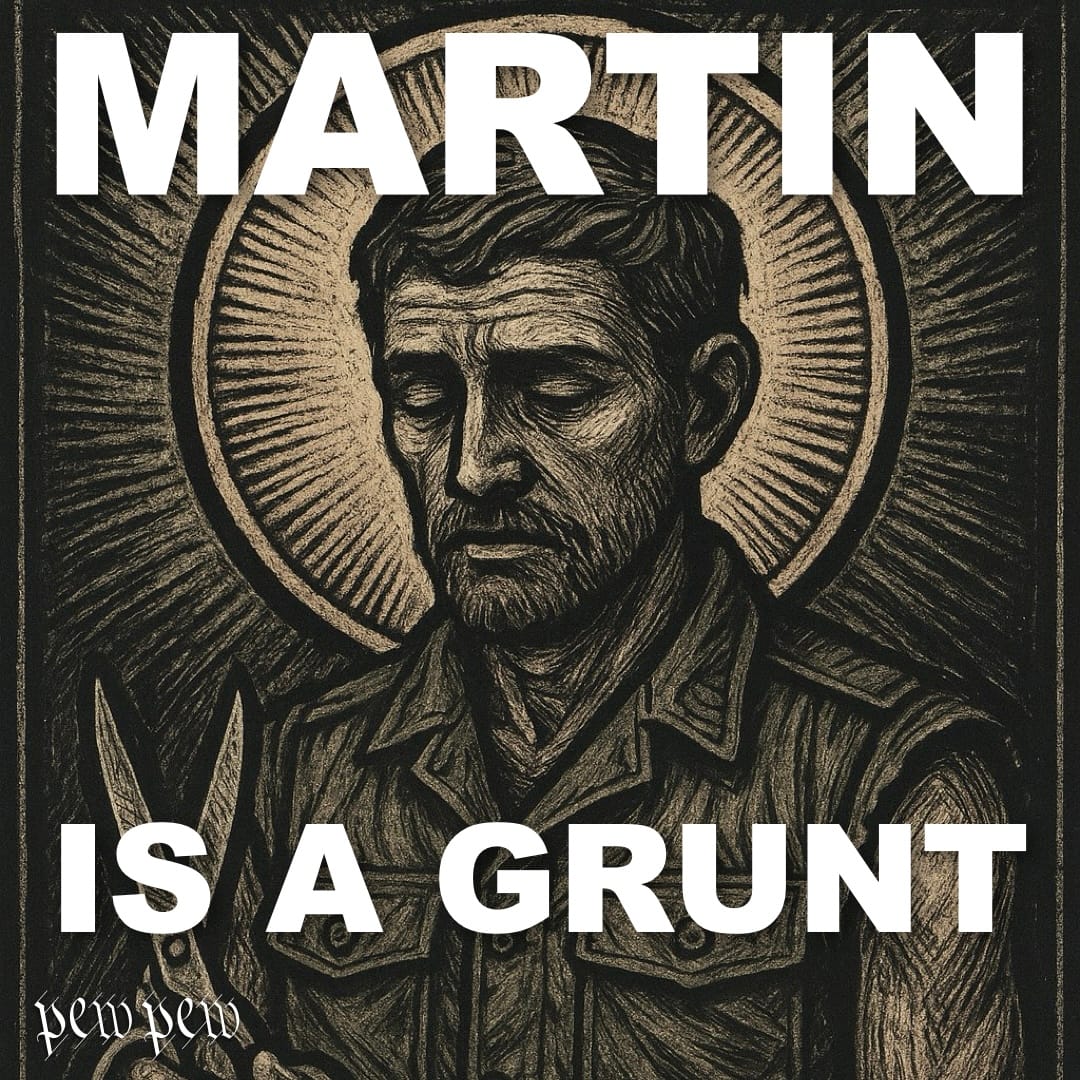
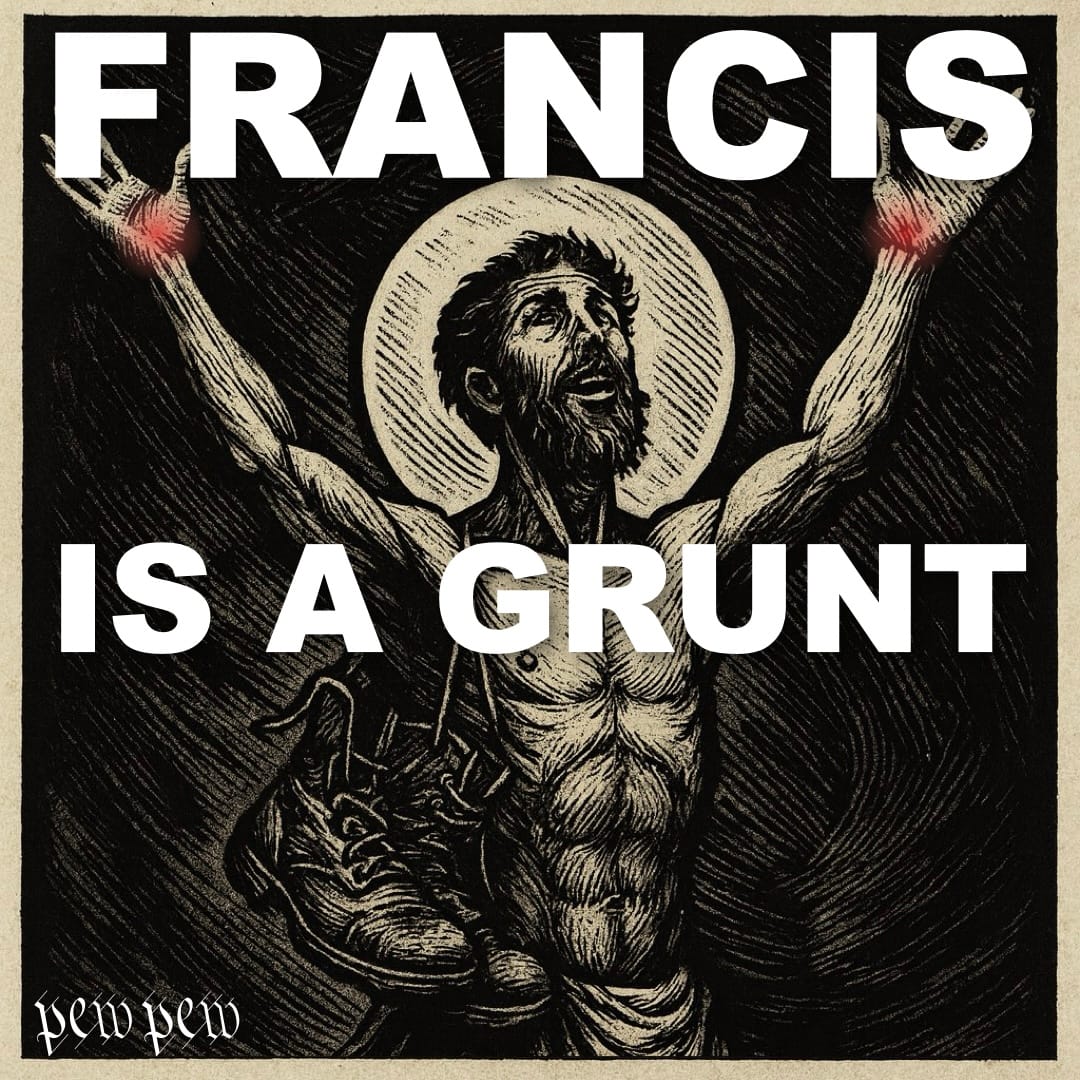
The two men I keep coming back to when I try to name what I actually believe are Martin of Tours, who upon the battlefield at Worms confronted an emperor he had every reason to think would kill him for it, and Francis of Assisi, who crossed the lines at Damietta to preach to a sultan his own side assumed would execute him on sight. Neither pulled back from the risk. Neither pulled the trigger themselves, either. They put their bodies in front of outcomes they didn't control and then let those outcomes land, or not, on someone else's timeline. That's the standard, as best I can articulate it: expose yourself fully to what the truth might cost you, and then don't be the one who closes the account.
I'm not going to pretend I know what separates me from J. or from S. Some of it is genuinely circumstance; I came home from Iraq with a story that didn't need inflating, and the market never tempted me the way it tempted S., because I already had what he was reaching for. But I'd be lying if I called that virtue. I don't actually know how I'd have held up against a stronger version of the same temptation, and I'm not owed credit for a test I never took. What I do know is that circumstance didn't decide the last, worst thing that could happen to any of these men. Westhusing chose to close his own account. Arday's death, if it proves self-inflicted, will be the same kind of choice, whatever the accumulated weight that produced it. Circumstance can explain the weight. It can't explain the decision to set it down that way.
What's left to spend
I closed a different piece here last week with a phrase I keep returning to: patior ergo possumus — I suffer, therefore we can. It wasn't meant to start a series, but I notice it's become the only answer I actually have to the four men in this essay. I'm not interested in playing the market the way Arday may have, or the way S. did, trading in a story I'd have to keep defending. I'm not interested in trading it the other direction either, in the quiet, principled subtraction that's killing J. by inches, or in the fast version that killed Westhusing outright. Both of those exits look, from where I sit, like a kind of death I can already see coming and have decided not to walk toward.
What's left is the harder, slower thing: stay inside the cost, let it be seen, and refuse to be the one who administers the ending. I don't know yet what the rest of a faithful life looks like if martyrdom never actually comes for me. But I know it isn't a story I have to sell, and it isn't an exit I plan to take myself. It's a debt I keep choosing to owe, on purpose, for as long as I'm here to pay it. Muddied hands and all.