Memorial Day 2021
We Win Some, We Lose Some

*With a third book on the horizon, I decided to venture back into the public debate after a few years away. I reached out to an old friend at a large nonprofit who encouraged me to submit an essay to a colleague, which I did, ten days before Memorial Day. With four days left, I got a brief reply; my essay was declined due to "a heavy queue of pieces from earlier in the week." When I checked their website, there was no new material, not even for Memorial Day. It was too late to pitch it elsewhere, so I am sharing that essay here.
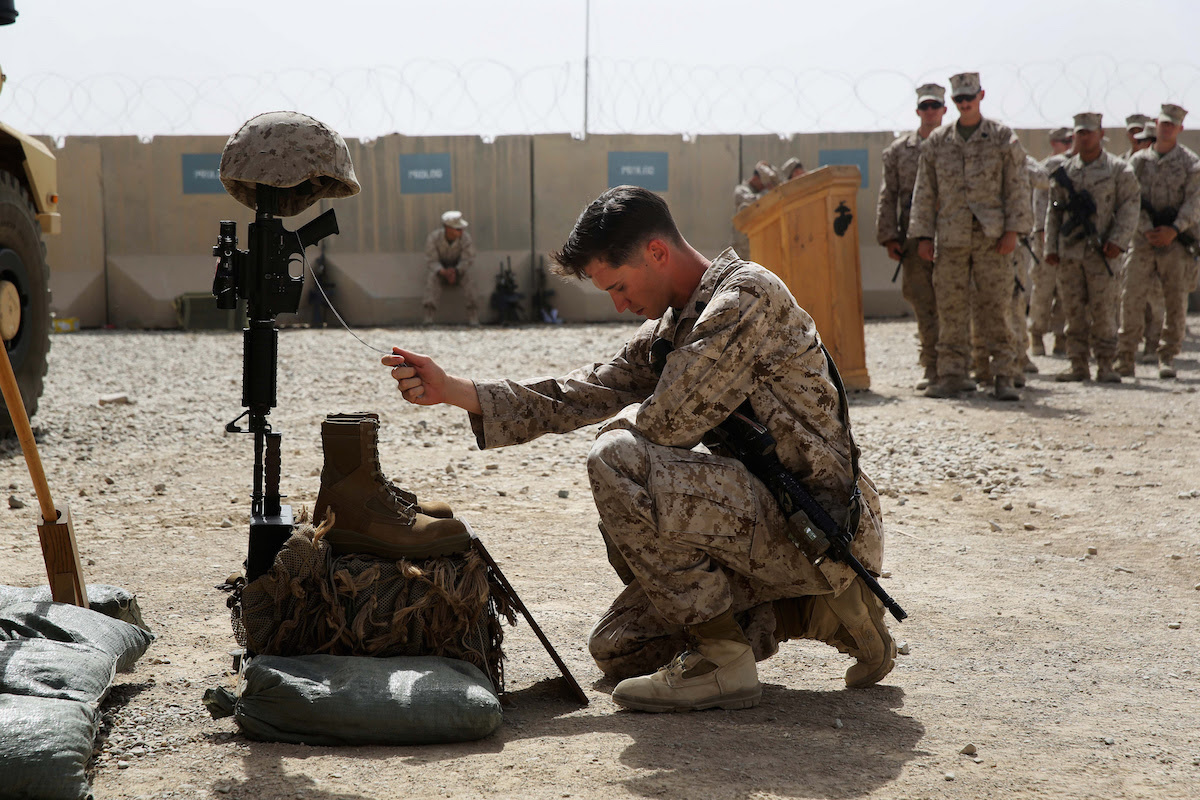
As a veteran, I have not had the same experience of Memorial Day as my civilian friends. Military communities usually spend the holiday mourning dead family and friends rather than celebrating the arrival of summer. For many of us, the day is an annual reminder of the disparity between military families and most Americans. It is easier to repurpose Memorial Day when less than a tithe of Americans have any direct connection to the military. History becomes flexible when “we” are the majority, and “they” can be made props in the story we want to tell about ourselves.
Every May I wonder why I’ve been spared from combat, cancers, and especially from suicide. After all, I’ve heard my fair share of civilian animosity and prejudice. An ordained clergy person once told me he felt “threatened” by me as I stood on his doorstep, six pack in hand, to try to resolve tension at the church we both attended. His spouse, a licensed therapist, said “you’re crazy… everything you touch goes bad.” Another time, another pastor interpreted late night, parent-related exhaustion as me “seething with anger” and of acting with “extreme hostility.” He too felt “threatened,” even though I remained seated during our brief encounter.
Most people I know who have died were veterans, and most have died by suicide. Every year, the same kind of thoughts that doomed them often creep into my own mind; If I am the monster civilians see in me, then why am I alive and not my friends? Wouldn’t my family be better off without me dragging them down? On more than one occasion, my wife has been told that I make her, and my daughters’ lives harder, for reasons always connected to my military service. The police were called against me in one such instance, who were warned of my combat experience and PTSD diagnosis, without my having even raised my voice.
I hope that harmful words like those said to me are exceedingly rare, but judging by the military suicide rate, I fear they are commonplace. That may be why I find solace in the words Jesus spoke shortly after he was nailed to the cross, “Father forgive them, they know not what they do” (Luke 23:34a, NRSV). At first, I found comfort in knowing I could be forgiven for things I unknowingly perpetrated in war, but lately, the passage has reminded me to forgive people whose bias perpetuates harmful stereotypes that dehumanize soldiers and veterans.
Jesus’ words in Luke are a double-edged sword; it is only through penance that we receive forgiveness. They are typically thought to be directed at the soldiers “who cast lots for his clothes” (v.34). But that is a myopic view of holy scripture that scapegoats soldiers and reinforces anti-military bias. The they/them to whom Jesus refers is actually ambiguous; he could be referring to “the criminals” beside him (v.33), “the people” watching nearby (v.35a), or “the leaders” who scoffed at him (v.35b).
Every person, then and now, who accepts responsibility by acknowledging their ignorance, are made the recipients of the Father’s forgiveness. They become the subjects of the Son’s address the moment they hear and believe. Forgiveness cannot coexist with ignorance because grace is not cheap. The paradox of the cross is that to receive forgiveness, you must ask for it. Asking presumes guilt, it requires remembering our place in doing, or failing to disrupt, evil and injustice.
It may be preferable to most Americans to keep Memorial Day superficial because doing otherwise requires that we confront our own biases and complicity. The earliest recorded observances were for Confederate casualties and the first states to declare public holidays were in the South. For advocating moderation when activists attacked two local memorials dedicated to rank and file Confederate soldiers, who were conscripted disproportionately from the rural poor, another veteran called me “a coward and a moron.” To take Memorial Day seriously is to acknowledge the conflicted relationship Americans have with ourselves, of creating distinctions between a righteous “we/us” and unrighteous “they/them.”
At the heart of the issue is subjectivity; if Memorial Day really is for and about dead soldiers, why must their stories and grief take a back seat? Why is the impulse to frontload soldiers’ guilt over anyone else’s in Luke 23? The narrative mobility expected of soldiers, of being moved between background and foreground to serve the interests of others, is an impossible standard. It is also unjust. Fortunately, getting out of this mess is not a binary either/or, but a both/and.
Thinking of Memorial Day, would you roll up to a friend's funeral with a Weber? Soldiers and veterans might actually answer Yes! Plenty of us will spend the holiday grilling graveside, beer and burger in hand, reminiscing about our dead friends. In fact, the tradition of saints’ Feast Days began in graveyards, where believers broke bread and drank wine while reminiscing about the miraculous deeds of the martyrs.
We do not have to throw out Memorial Day, we do have to appreciate that it, and the soldiers remembered, are complicated. None of God’s creatures are reducible to either monsters or heroes. And no American, as a member of our democratic republic, is totally innocent of wars fought in their name. Rather than running from our own complicity, we should accept responsibility for our collective sins. As we do, the dividing wall between soldier and civilian will come crumbling down.