The Hazards of Privilege


There is a specific kind of absurdity that only power can produce: the powerful claiming injury at the hands of the powerless.
Watch how it works.
On May 15, 2025, James Comey posted a photograph to Instagram. Seashells on a North Carolina beach, arranged by tide or chance or a stranger's idle hands into the numbers 86 47. He captioned it "Cool shell formation on my beach walk." He deleted it the same day when he learned that some people read "86" as slang for elimination — slang that, for the record, restaurant workers use dozens of times per shift to mean they're out of the soup special.
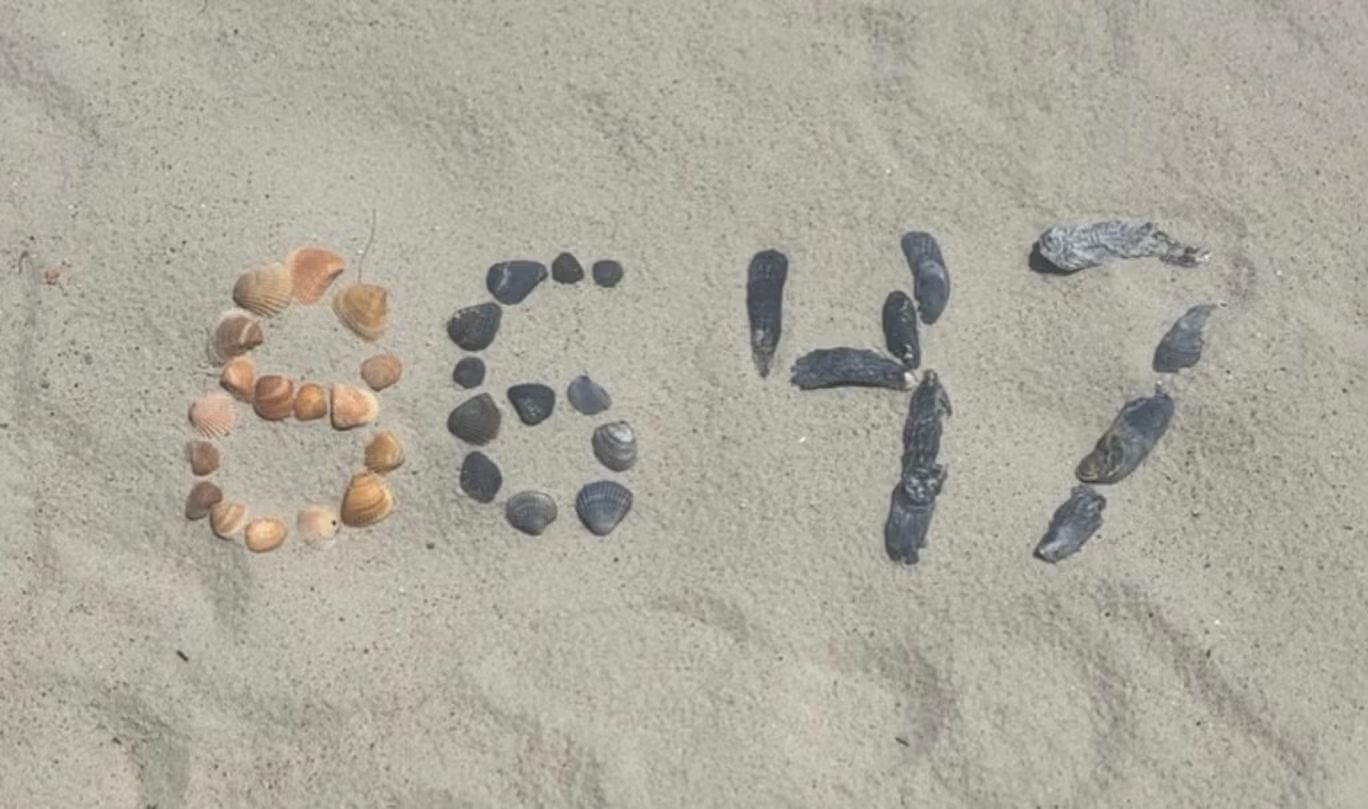
Within hours, the former FBI director had been accused of soliciting the assassination of the President of the United States. The Secret Service interviewed him. A grand jury has now indicted him on two felony counts. The man who fired Comey — the most powerful individual on earth, commanding the largest military apparatus in human history — is the alleged victim of a beach photograph.
I know something about this.
In Oregon, I am a plaintiff in a federal civil rights lawsuit, Isaac v. Manning, against state legislators who used the machinery of elected office to silence a combat veteran asserting his constitutional rights. I was not threatening anyone. I was not hiding anything. I was doing exactly what a citizen is supposed to do: organizing, naming injustice, demanding accountability. The response from those holding elected office — the fasces, in the original Roman sense, the bundle of rods and the axe that symbolized the magistrate's absolute authority — was to treat my speech as the aggression and their suppression of it as self-defense.
The person holding the axe does not get to claim the woodpile assaulted them.
This is what sociologist Michael Kimmel calls aggrieved entitlement: the experience of privilege as injury when that privilege is questioned. Kimmel forged the concept in the study of masculinity — specifically, in examining why men who have lost nothing except their exclusive claim to dominance describe themselves as victims of the women, minorities, and immigrants who have simply begun to share the room. But the concept describes something older and wider than gender. It describes what happens when any dominant group mistakes the contraction of their unearned advantage for an attack on their person.

Gender is where this pathology is most legible, which is part of why I am launching Mantidote — a monthly gathering beginning this May — to examine what moral health actually looks like when we take seriously how masculinity, identity, and power intersect. Kimmel's framework is useful precisely because it locates the wound not in the loss of something real but in the shattering of an entitlement narrative. That narrative is theological in structure, whether or not it wears religious language. It says: my position is natural, therefore any challenge to it is unnatural, therefore I am the victim of something unnatural. Davis, Perry, and Manning told that story about a veteran filing a civil rights complaint. The Trump DOJ is telling it about seashells.
The hazards of privilege run in only one direction. The person holding the axe does not get to claim the woodpile assaulted them.
There is a theological name for what I am describing, and it is not subtle. Every empire has practiced it. Rome crucified peasant organizers and called it the preservation of order. The Pharaoh held Israel in bondage and called his ten-plague comeuppance an assault on Egypt's dignity. The scribes and Pharisees — good men, learned men, men who genuinely believed their own account — called Jesus a threat to the people, to the Temple, to the nation. The high priest that year said it plainly: it is better for one man to die for the people (John 11:50). He was not wrong about the mechanics. He was catastrophically wrong about who the victim was.
This is not a peripheral theme in Christian scripture. It is the central one. The scapegoat who returns to the camp always looks like the problem to the people who did the casting. The cornerstone the builders rejected always looked like a liability before it became the foundation. The witness whose testimony tells you the actual cost structure of the common life is always the one the system cannot bear to hear.
Comey's seashells did not threaten anyone. My advocacy did not threaten anyone. What both threatened was the story that powerful people tell about themselves: that their power is innocent, their fear is legitimate, and their retaliation is what they call justice.
That story is a religion built on entitlement. It is not the gospel, it's the furthest thing from it.
The fasces has been in their hand the whole time. The indictment and the ban are the proof. You don't need me to interpret it. The evidence interprets itself, and that's what scares them.
Mantidote meets monthly beginning in May in Albany, Oregon. Details and registration at Eventbrite.