
What the Church Failed to Tell You


There's a good chance nobody did this to you on purpose.
Your pastor probably loves you. Your Sunday school teacher probably meant every word. The people who handed you a Bible and taught you how to read it almost certainly did so with the best intentions they had. And somewhere in the gap between their intentions and what actually landed, you got a version of Scripture that was missing something — not a small thing, not a footnote, but something load-bearing. Something that might explain why the Bible has always felt, to people like you, simultaneously true and slightly off. Like a song you know but someone changed the key.
Here's what happened.
January 27, 1973
In 1973, Secretary of Defense Melvin Laird ended the military draft. It was the right call for a lot of reasons, and this isn't an argument to bring it back. But something happened to American Christianity when it did, and nobody named it at the time, and most people still haven't.
Before 1973, every male citizen of military age lived with a specific kind of proximity to the cost of collective freedom. Not as an abstraction. Not as a bumper sticker. As a letter that could arrive. A number that could be called. A body that could be sent. You didn't have to serve to carry that weight — you just had to be eligible. And eligibility was universal enough that even people who never wore a uniform understood, in their bones, that freedom and cost were not separable categories.
The Bible was not written for a society where those categories had been separated.
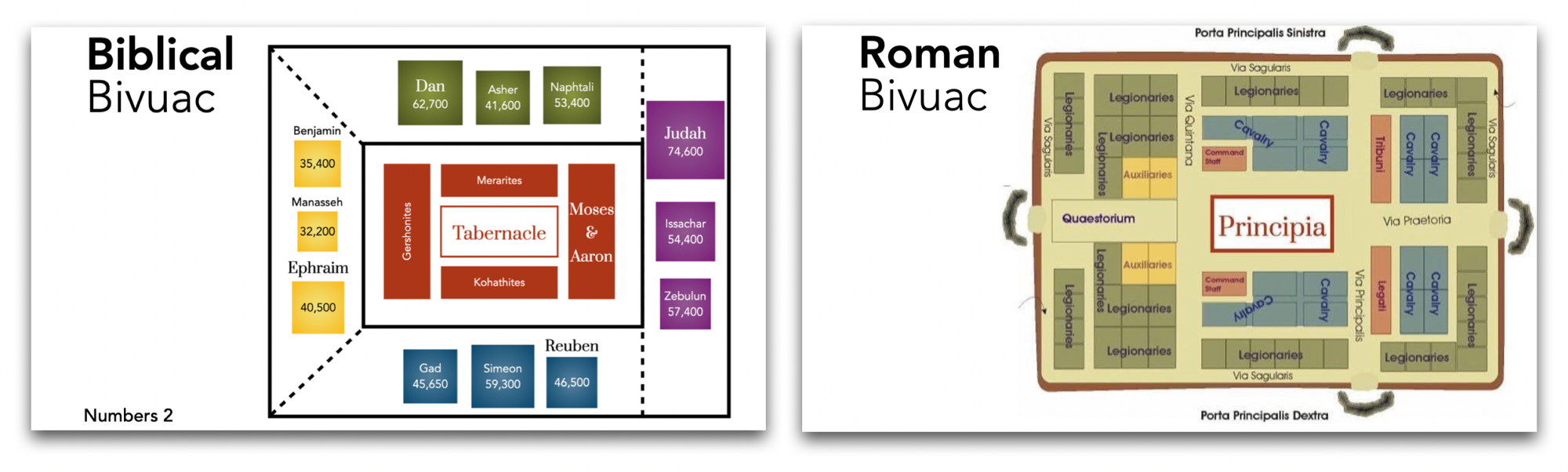
Every text in Scripture — from Moses organizing Israel into fighting units in the wilderness to Paul writing letters to communities that included active-duty Roman soldiers — was written into a world where the relationship between belonging to a people and being willing to die for that people was not optional, not theoretical, and not somebody else's problem. That's not incidental background. That's the social grammar the whole thing is written in. And when you lose the grammar, you can still read the words. You just can't hear what they're saying at full volume.
What you get instead is a Bible that's been — I want to use a precise word here — civilianized. Not falsified. Not destroyed. Still true in all the ways it was always true. But tuned to a frequency that entitled people (who never had to pay the cost) can receive, and slightly out of range for the people who did.
The Stuff That Got Left Out
Here's a concrete example of what I mean.
On Palm Sunday, most churches read from Psalm 118. You've probably heard it — "This is the day the LORD has made; let us rejoice and be glad in it." Good stuff. Genuinely good stuff. The Revised Common Lectionary, which is the standardized Scripture reading schedule used by most mainline Protestant and Catholic churches, gives you verses 1-2 and then jumps to verses 19-29.
It skips verses 14-17.
Those verses say: "The LORD is my strength and my song; he has become my salvation... The right hand of the LORD does valiantly, the right hand of the LORD is exalted, the right hand of the LORD does valiantly. I shall not die, but I shall live, and recount the deeds of the LORD."
That's a war song. Specifically, it's almost word-for-word the song Miriam sang after the Egyptian army drowned in the Red Sea (Exodus 15:2). The "right hand of the LORD" doing valiantly is martial language — it's the hand that fights, that strikes, that wins. The congregation singing Psalm 118 on Palm Sunday, in its original context, was not singing a polite hymn about a nice day. They were singing a victory song, in advance, about a God who wins battles and whose people do not die but live to tell about it.
The lectionary cut that part.
Nobody who made that cut was lying to you. They were probably making a reasonable liturgical judgment about time and flow and what a Palm Sunday service should feel like. But the effect — accumulated across a thousand similar cuts, across decades, across an entire tradition of reading Scripture for people who no longer have skin in any game that costs anything — is a Bible that has been quietly edited toward comfort and away from cost. Toward the God who makes nice days. Away from the God of Armies who shows up when the empire comes for your people.
The Voices You Were Supposed to Hear
When "Jesus" stands up in the synagogue in Nazareth and reads from Isaiah — "The Spirit of the Lord is upon me, because he has anointed me to proclaim good news to the poor" — he stops in the middle of a sentence. The full sentence in Isaiah 61 continues: "...and the day of vengeance of our God."
He closes the scroll before he gets there.
The room goes quiet. Luke says "the eyes of all in the synagogue were fixed on him." We read that as reverence. What it almost certainly was, for a room full of people who knew Isaiah by heart because they'd heard it their whole lives and couldn't read it themselves, was the sound of an audience waiting. They heard the pause. They knew what came next. They were waiting to find out whether he was going to say it out loud, whether he was there to muster them to service.

He didn't. And they tried to throw him off a cliff.
That's not a story about a peaceful Christ interrupted by irrational violence. That's a story about a room full of people who understood exactly what was and wasn't being claimed, and responded to the political and theological implications of the pause. The gap between what he read and what they expected is where the whole argument lives. His (militarized) neighbors wanted a Messiah who would overthrow the Herodians, but Christ's "violence" wouldn't be satisfying, it would be sacrificial. It would be costly.
You've probably been handed a version of that story — and a hundred stories like it — in which the gap doesn't exist. In which Jesus just says beautiful things and then bad people get upset for no clear reason. In which Mary's song about God scattering the proud and pulling the mighty from their thrones is a gentle poem about social justice rather than a victory song sung by a woman who knew her Hannah and her (namesake) Miriam and understood exactly what kind of God she was carrying.
That's not the fault of your teachers. It's the water they were swimming in too.
The Folk that Messiah Kept Visiting
There's a pattern in the Gospels that's easy to miss if you're reading with modern eyes and a modern map.
Naphtali and Zebulun are two of the northern Israelite tribes — the ones that took the full force of the Assyrian invasion in the 8th century BCE, the ones that got deported and intermarried with foreign settlers and became, over the following centuries, the people the 'respectable' southern (Davidic) Jews called Samaritans. They absorbed the cost of bad leadership at the top, survived a military catastrophe their own kings couldn't prevent, and got theologically scapegoated by the returnees who decided they were too contaminated to worship with at the earliest site of God's dwelling place; Shiloh's Mount Gerizim.

Matthew 4 quotes Isaiah's prophecy about Naphtali and Zebulun — "the people dwelling in darkness have seen a great light" — to locate the beginning of Jesus's public ministry. And then, consistently, throughout all four Gospels, Christ keeps showing up exactly where those people are. The Samaritan woman at the well. The one grateful leper who comes back, a Samaritan. The hero of the parable who stops to help, also a Samaritan. The people who absorbed communal cost that the respectable center didn't share and refused to acknowledge.
This is not coincidence. The people who have been scapegoated and sanctified in word while being dismissed in practice — those are not a footnote to the Gospel. They might be its primary addressees.
If you have ever felt simultaneously claimed by the church's language and abandoned by its practice, you are standing in a very old tradition. The Bible knows you're there. It was, in many ways, written for you specifically. What it wasn't written for is the version of you that a well-intentioned civilianized church has tried to produce — safely distant from cost, grateful for the nice days, not asking too hard about the parts that got cut.
What This Project Is
What I'm building with Grunt Works is an attempt to read Scripture with the ears of its original audience rather than the eyes of ours.
That means letting the military language be military language instead of metaphor. It means noting when a citation activates a larger text that the author assumed you'd hear in full. It means paying attention to what got left out and asking why. Not to be difficult, but because the stuff that got left out is often where the most honest theology lives; the cost of freedom, the sting of military defeat, the specific weight carried by people who didn't choose to be on the wrong end of someone else's decision.
This isn't about making the Bible violent or hard or inaccessible. It's about making it true in the way it was always true, for the people it was always most truly for.
Nobody stole this from you on purpose. But you're allowed to want it back.