
What HillVets Taught Me About How Veteran Nonprofits Fail Veterans

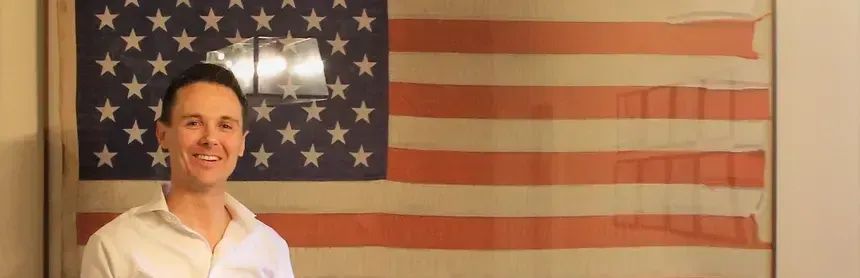
I joined HillVets LEAD in September 2019 as a Cohort 3 protege in the Communications and Media pipeline. I had a newborn and three years of military civil rights advocacy behind me. I thought HillVets was the room I'd been trying to get into.
I was right about that. I just didn't understand what kind of room it was.
HillVets is real. The access it provides to Capitol Hill is real. The people in it are, by and large, exactly who they say they are — veterans who care about the community, who want to see more of us in positions of influence, who work hard to make those connections happen. I made contacts through HillVets that I still value. The program worked for me in every way the program was designed to work.
The problem is what the program was designed to do, and what it was designed not to do.
The night of CapCon
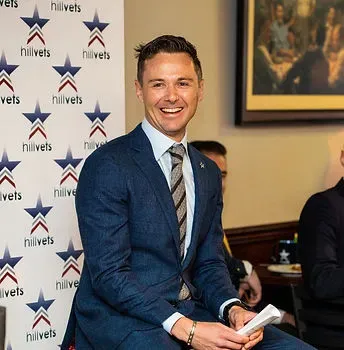
In December 2019, HillVets held its Capitol Conference at Gallup HQ in DC. The Media protege’s were in charge of a panel featuring David Wood and Thomas Brennan. During a Q&A with then-Representative Elissa Slotkin — a veteran herself, an intelligence officer, someone I had reason to think might hear me — I asked a question about military civil rights. About why soldiers and veterans remained excluded from the protections they secure for everyone else. About why hate crimes against military families went unenforced.
Justin Brown, HillVets' founder, interrupted and tried to shut me down.
I don't know exactly what he was afraid of. But the effect was what it always is when a veteran gets shushed in a room full of veterans: everyone in the room saw it, and the question didn't get answered. Officer types might be grateful for the ranking soldier keeping things on track, but a lot of the grunts probably wanted to hear what the barracks lawyer had to say…
I went home that night and sent Justin an email asking to grab coffee before the next LEAD meeting. I wanted to talk about my Q4 goals. I wanted to believe what had happened was a misunderstanding. The day after that I sent him my full GIJustice advocacy packet — the Act handout, the HCPA and VEVRAA amendments, everything. Four PDFs representing years of work.
He never replied.
What I learned over six years
I kept reaching out to Justin. Not obsessively — I'm a stay-at-home parent running multiple organizations on no budget, I don't have time to obsess — but at the natural intervals that the relationship seemed to call for. Job applications, a book launch, a question about congressional committee oversight. He helped every time. He was collegial. He knew how to be a good contact.
In September 2020, I asked him about faulty DoL VETS employment discrimination reports being sent to Congress — a technical question about oversight mechanics. He read my Medium article, gave me editorial feedback, connected me with a HVAC staffer by name. That was the most substantively engaged I ever saw him. He knew how to help.
In August 2024, I contacted him again. By then, Oregon was in the process of introducing the first statewide Military Civil Rights Act in the nation. The senior Oregon Senator, Ron Wyden, was working with me on the second Congressional Inquiry to the Department of Justice seeking data on anti-military hate crimes. I wrote to tell him what was coming and ask if HillVets could help.
He didn't reply.
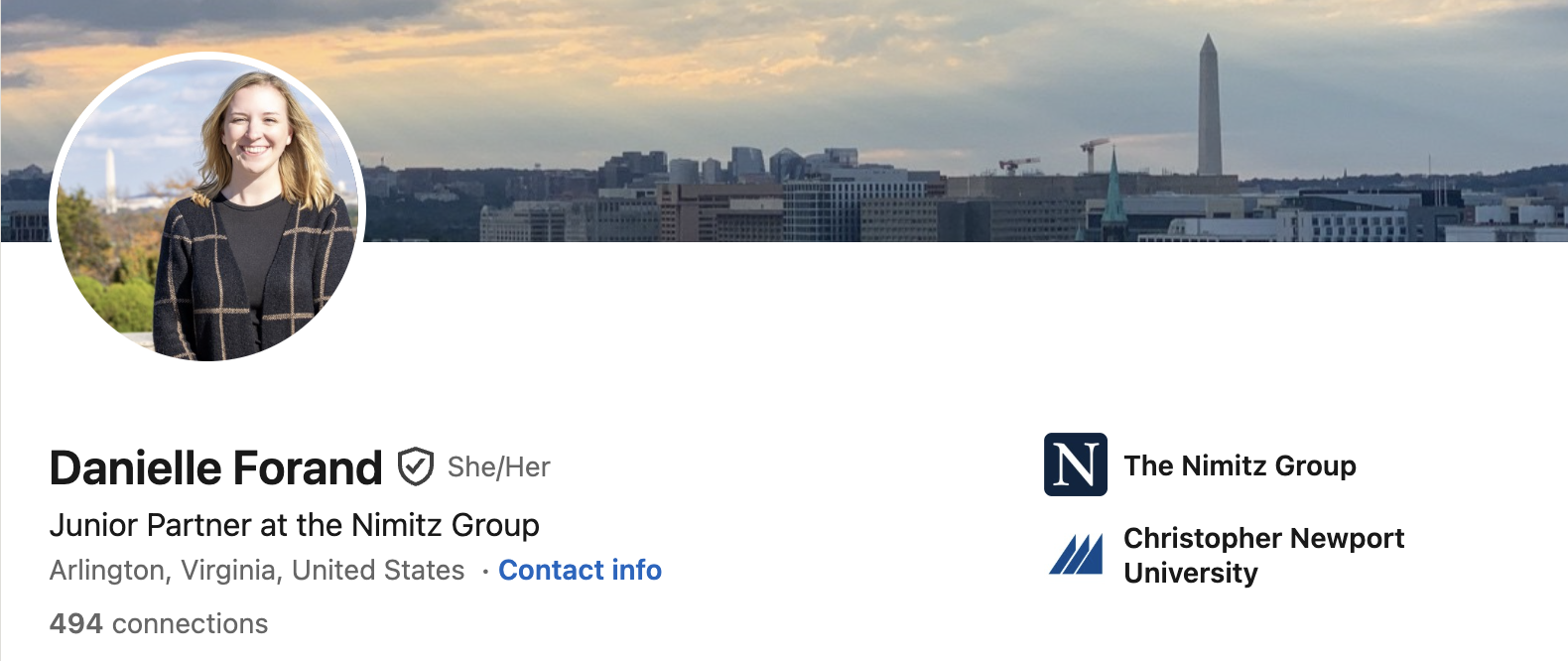
I waited a month and sent the same email to his staff list — Dallas, Nicole, Rita — because I'd learned that addressing only him meant the message disappeared. This time he replied within hours. His reply: HillVets doesn't weigh in on issues. If I had specific asks, he and Danielle Forand (a PR professional he added to the thread without introduction) could help in their personal capacity. Also, I was welcome to use the HillVets Slack myself.
I wrote back a few days later and told him plainly what I thought: that he had been bougie, condescending, and rude during my time as a Fellow; that he had tried to silence me at CapCon; that if journalists ever asked how military civil rights escaped public notice for so long, I wouldn't be able to say HillVets helped.
His reply: three sentences. "I think I have always been a straight shooter with you. I'm sorry you didn't like what I had to say. I wish you the best in your endeavors."
No denial of the specific incidents. No engagement with the substance. An exit designed to look like grace.
In December, I testified before the Oregon Senate Veterans Committee in support of the nation’s first comprehensive military rights act, SB1057. Then James Manning, another enlisted blue falcon, killed the bill in retaliation for protected political speech. The legislative momentum I tried to build was disrupted by the same kind of entitled, institutional retaliation that was by then becoming a pattern in this work.
The red flags, for those behind me
I want to be specific, because vague warnings are useless. Here is what the pattern actually looked like, and what it means.
Selective responsiveness is a policy, not a personality. Justin was consistently helpful when the ask fit the pipeline mission — career navigation, contacts, the normal functions of a “professional” network. He was consistently unavailable when the ask was substantive advocacy. This is not an accident or a personality flaw. It is a deliberate organizational position, and it will be dressed up in language about tax-exempt status and "not weighing in on issues." Ask any organization you're considering working with: What issues have you not weighed in on, and why? If they can't answer, the answer is the same as HillVets'.
Audience control is a suppression tactic. When I CC'd his staff, he responded — and immediately moved the conversation to a smaller, private channel that excluded them and narrowed the number of eyes on his blue falconry. He introduced a third-party professional as a witness to his reasonableness. He controlled who could see the exchange. In nonviolent direct action terms, this is the move an institution makes when it can't ignore you but also can't afford to be seen engaging you on your terms. Notice it.
The "personal capacity" offer is a firebreak, not a bridge. When Justin offered that he and Danielle Forand could help "in their personal capacity," that language was doing specific work. It meant: I will help you in a way that doesn't implicate the organization, doesn't create a precedent, and can be withdrawn without institutional consequence. It's a way to appear responsive while ensuring nothing changes. "What specifically do you need" is a genuine offer. "In my personal capacity" is a soft no.
A three-sentence exit is a document. Justin's final reply was not casual. It was crafted. "I have always been a straight shooter" addressed my characterization of him without admitting or denying specific conduct. "I'm sorry you didn't like what I had to say" reframed my documented critique of specific events as a subjective reaction to his communication style. This is what management of a record looks like. When someone gives you a three-sentence reply to a detailed accounting of specific incidents, they are not being concise. They are protecting themselves.
The org that celebrates you and the org that serves you are not the same org. HillVets celebrated me as a LEAD protege, used my name in their materials, gave me access to a network I genuinely value. It did not serve my advocacy on behalf of the whole military community. Those two things can coexist in the same institution, and often do. The question to ask of any veteran-serving nonprofit is not "do they honor veterans?" but "do they honor this veteran, with this work, asking for this thing?" The answer will tell you more than any mission statement.
Why I'm telling you this
I felt relief the day I sent Justin that September 2024 email, even before I knew how he'd reply. I feel relief now, writing this. Part of what GIJustice exists to do is to make the experience of military civil rights advocacy legible — not just the legal arguments, not just the legislative work, but what it actually costs a person to do this work and who stands in the way.
Justin Brown is not my enemy. HillVets is not a corrupt organization. What they are is an example of how institutions that exist to help veterans can simultaneously function as a ceiling on what veterans are permitted to say. That ceiling is real, it is enforced, and it is mostly invisible until you hit it.
I hit it in 2019. It took me five years to understand what I'd hit.
I'm telling you now so you have a shorter learning curve than I did.
20260711 Addendum
A note added July 11, 2026
I recently received an action alert from jbrown@thenimitzgroup.com — Justin Brown's email address at The Nimitz Group, the lobbying firm he founded and leads — asking me to support H.R. 9237 / S. 4744, the Take Care of America's Veterans Act, on behalf of AMVETS. I don't remember subscribing to The Nimitz Group's list.
Public lobbying disclosure records show The Nimitz Group is a registered federal lobbying firm that reported $520,000 in client fees in 2025 across ten clients, meaning each contract averages about $52,000, more than I make in a year as a 100% disabled veteran. AMVETS is a documented Nimitz Group partner, with joint content published under both organizations' names.
In September 2024, Justin told me in writing that HillVets "very intentionally decided to not weigh in on any issues." He used that position to decline supporting military civil rights legislation — work I was doing without a lobbying budget or a paying client.
I don't think the principle was ever the point. I think the filter was always commercial. Some issues get The Nimitz Group treatment. Mine didn't. I wonder why... 🤔
If you're a veteran considering HillVets LEAD, I'd encourage you to read the original essay above, and then ask yourself how your contact information will be used after the program ends.
Logan M. Isaac is a combat veteran of the 25th Infantry Division, a professed Hospitaller of Saint Martin, and the author of God is a Grunt. He lives in Albany, Oregon.