
Free-Loading Spirits: A Response to Russell Moore


Russell Moore, in "Culture War Is Not Spiritual Warfare," wants to rescue spiritual warfare from culture war. He's right that Ephesians 6 doesn't authorize treating a political opponent as a demon. A hostile human being remains a candidate for kinship in Christ. But Moore misses the sentence Walter Wink spent three books insisting Ephesians 6 requires: that "rulers and authorities" aren't only free-floating spirits hovering above the culture war, they are the interior of the institutions doing the fighting. A newsroom, denomination, or magazine has a spirit. Wink's argument is that you cannot claim the text without doing the diagnostic work of naming what animates the structure in front of you. Moore names "the Devil" in the abstract and stops there. That's not spiritual; it's the retreat Wink warned against — mistaking cosmic vocabulary for the harder work of unmasking.
Free-floating is how Moore imagines the powers: untethered, cosmic, hovering above the fray. That makes evil comfortable to name because nobody pays for it. Wink's correction is that the "Powers" are structural; the interiority of an actual institution. Once you tether a power to an institution, it becomes clear that it is freeloading: a spirit benefiting from someone else's labor and exposure while carrying none of the load. Free-floating evil is comforting because it's nobody's bill. The freeloading account is uncomfortable because it articulates the unspoken reality, namely that someone else paid for our ill-gotten privilege.
The receipts I have are from the institution Moore agreed to lead for three years, which his essay never diagnoses.

In 2015, before Moore joined Christianity Today and became editor, the magazine put my face on its June cover for a story about PTSD. I hadn't approved the framing. I had told the design director in writing that I did not agree to be photographed with the preemptive ‘damaged-goods’ framing. What ran instead was terse and unflattering, captioned "War Torn." When I objected, editorial director Katelyn Beaty explained the reasoning: a cover's job is to create "a powerful emotional response." Not to tell the truth about a subject, but to generate a reaction for subscribers.
That sentence is the unmasking Moore's essay needed. It names the power at work in Christian media; a specific incentive structure where readers respond to pain better than nuance, driving the numbers that keep the lights on.
When Moore writes that the church must start naming the Devil's real tactics (deception, accusation) I would ask: what did naming those tactics ever cost his institution? Nobody at CT has publicly reckoned with the 2015 dispute. Mark Galli was editor-in-chief when I told them to stop using my likeness, agreed on the phone the cover was derogatory, then denied ever saying so in writing.
When Daniel Harrell succeeded Galli, the freeloading spirit of CT persisted through Moore’s tenure and into Marvin Olasky's time at the helm. Four editors failed to publicly acknowledge that the magazine's operational mission was to manufacture reactions for paying subscribers rather than convey good news. CT’s freeloading spirit kept on devouring, without anyone having to notice their bowls were filled with someone else’s manna.
When I insisted they stop exploiting my work, I got grudging concessions (a revised web title, a pulled paywall image) eventually bundled with a lawyer's letter insisting the matter was closed and nothing wrong had occurred. CT moved just enough to relieve pressure without acquiring self-knowledge. That is the pattern Wink calls the Powers' native defense: absorb the complaint, keep the structure. Power without responsibility is corrupt, and corruption can only spread amongst the dead, be they public spirits or human souls. If CT wants to stay in the good fight, then it can’t take more power than it takes responsibility for. Otherwise it's already started to die, and all people of good faith can do is watch the natural consequences slowly drag CT back down to earth.
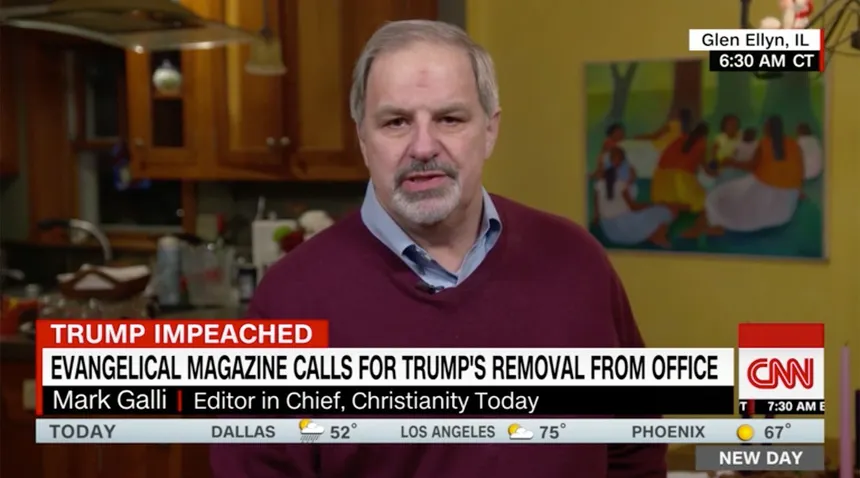
I don't think Mark Galli or Katelyn Beaty are possessed by demons. They were working inside a structure whose operative authority was subscription revenue wearing the vestments of journalistic integrity.
This brings me to Moore's failure: he uses spiritual warfare language to let his own institution off the hook for the cheaper spiritual work it's capable of doing. If Moore were serious about the work it does under Christ, it could model embodied cost instead of manufacturing it.
My diagnostic frame is simple: does the person or institution making a prophetic claim bear any of that claim's cost? Bonhoeffer bore his; Barth mostly wrote declarations from safety. A magazine that uses a veteran's face to create an emotional response and profits from the attention is doing the Barth move with someone else's suffering. Flannery O'Connor understood that the grotesque can counterfeit prophetic urgency without paying for it; an image that feels like truth-telling while costing its maker nothing. That is aesthetic urgency with the invoice sent to someone else.
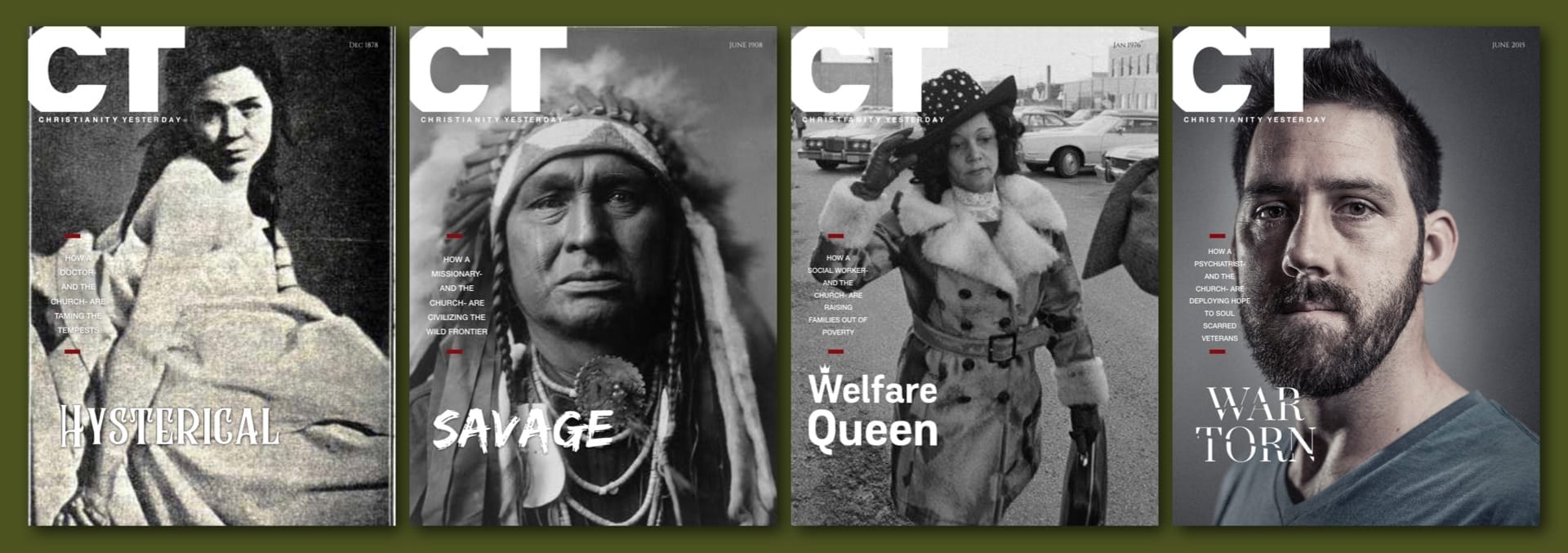
We've taught people that discernment is an individual, interior act while giving them no tools to question the institutions forming their imaginations. Nobody taught congregations to ask what a business model does to stories, or how leadership transitions launder an institution's spirit. Handing people interior discipline while exterior structural discipline atrophies is malpractice by omission.
Spiritual warfare, done honestly, doesn't stop at the border of our own newsrooms or reset when someone new takes the chair. Grunt Works has a spirit and an incentive structure too, and I'd rather have that named out loud than protected.
Wink's "Devil" doesn't need us fighting in comment sections (a "lesser evil" than fighting IRL) as much as he needs us agreeing that the real enemy lives somewhere else, in a spiritual register too cosmic to touch the mortgage on the building. Name the fallible power in the room you're standing in first. Then we can talk about the devils hiding in our own details.