
Why I Call It the Ending-War Chapel


On Exodus 15:3 and the Politics of Vowels
The name matters. When I call Martinalia the ending-war chapel, I'm not being poetic or aspirational in the way that advocacy organizations are poetic and aspirational — gesturing toward a future they'll never have to deliver. I mean something specific, rooted in a particular verse, a particular translation decision, and what I think that decision reveals about who gets to name reality.
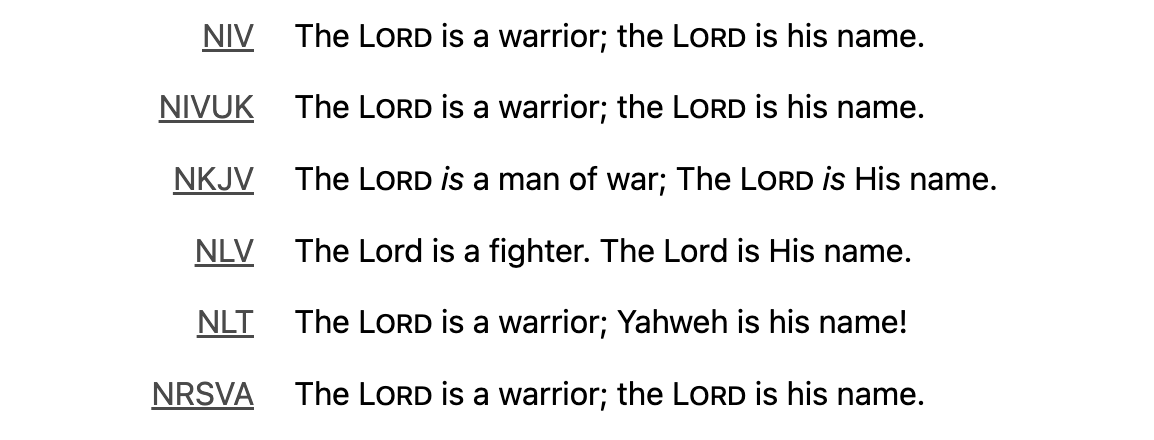
Exodus 15:3 reads, in most English Bibles: The Lord is a man of war; the Lord is his name. It is one of the oldest poems in the Hebrew scriptures, part of the Song of the Sea, sung after the crossing. It is unambiguous in its martial register. And for centuries of Christian pacifism and just war theory alike, this verse has functioned as the load-bearing beam for the argument that divine violence is at least sometimes legitimate — that God goes to war, therefore war has a place.
But the Septuagint, the Greek translation produced by Jewish scholars beginning in the 3rd century BCE, renders the verse differently: Κύριος συντρίβων πολέμους — the Lord, crushing wars, shattering them. The verb, syntribō, is a present active participle. Not a completed act, not a past victory, but an ongoing one: the Lord who is, continually, in the business of crushing war as such. The object of the divine violence has shifted entirely. What God destroys is not the enemy army. What God destroys is war itself — and keeps destroying it, present tense, unfinished.
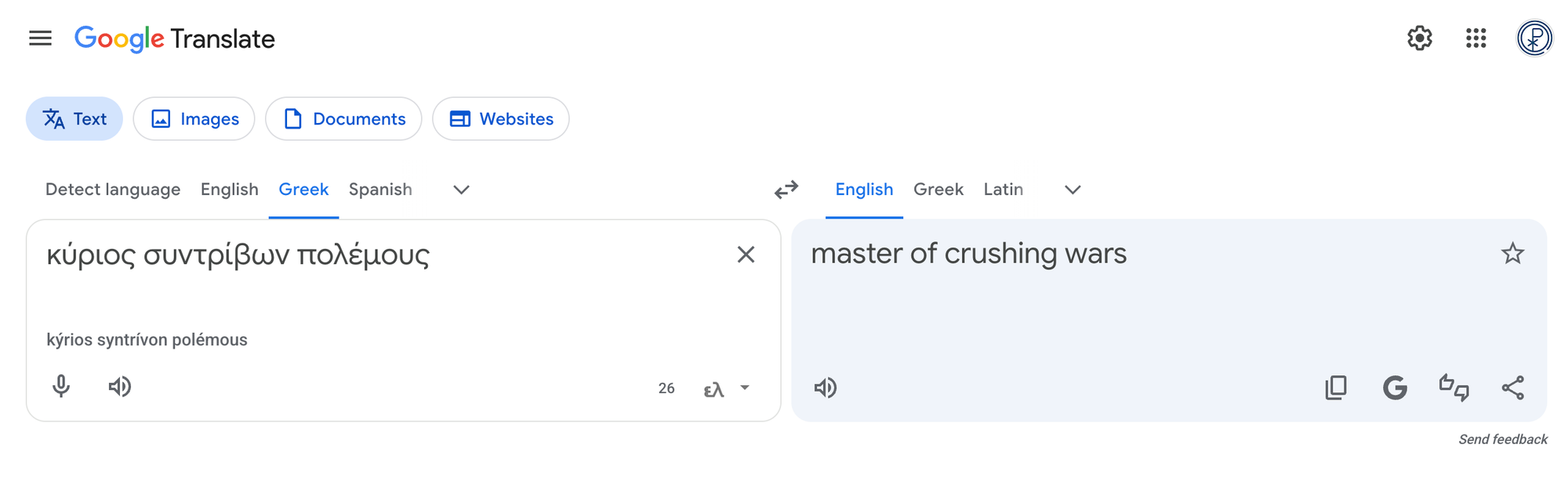
This is not a minor interpretive preference. It is a substantively different theological claim, and it's the reason I call this the ending-war chapel rather than the war-ending one. The participle in the Greek fronts the action and keeps it active; "war-ending" in English reads as a completed modifier, a finished job. "Ending-war" keeps the verb alive the way the Greek does. The war is not over. The ending of it is still happening, still required, still incomplete — which is also why, as I put it elsewhere, the machine keeps running long after the war ends.
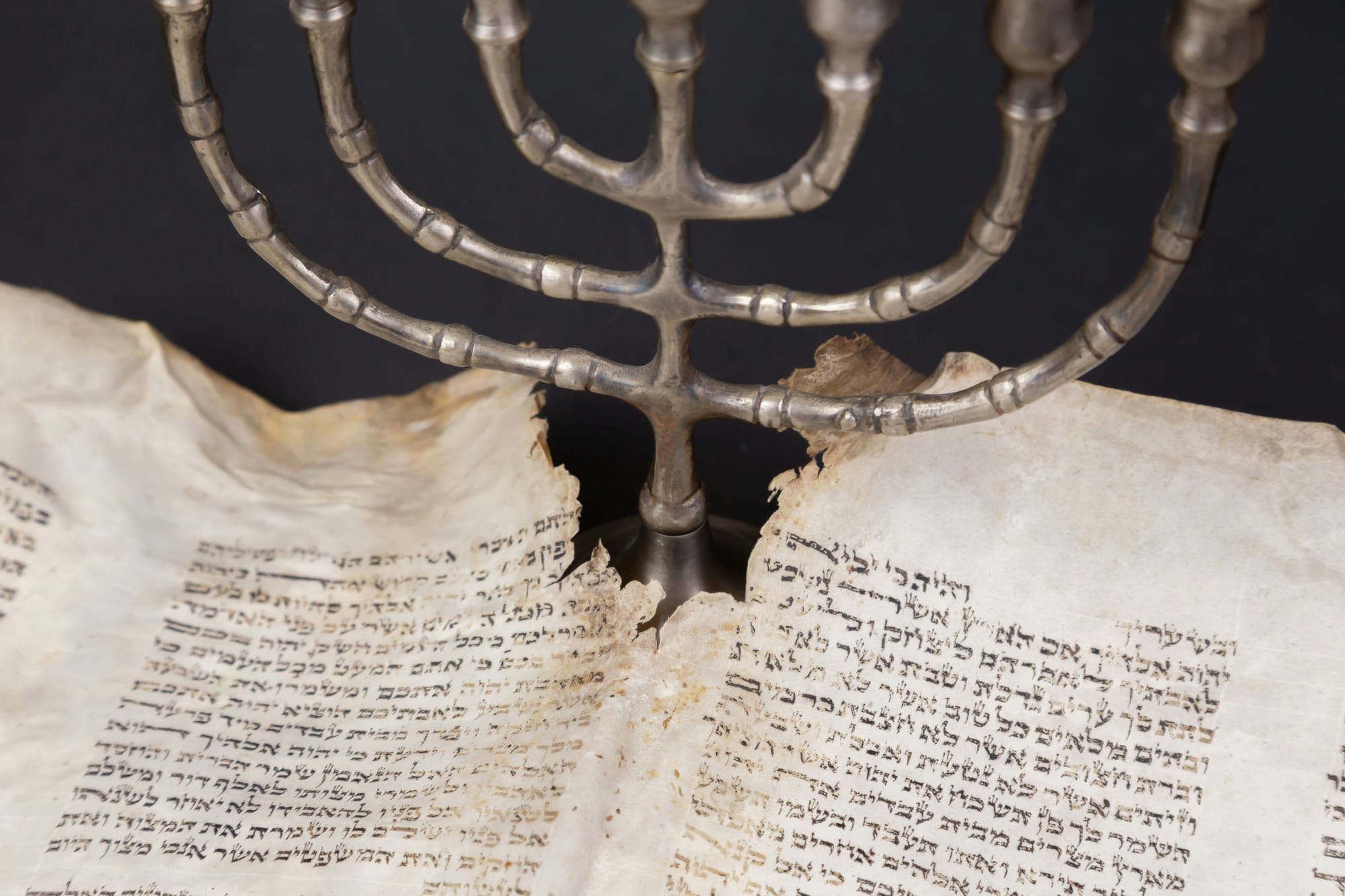
The version most English readers know descends from the Masoretic Text, the Hebrew tradition standardized by the Masoretes in the 7th through 10th centuries CE. What the Masoretes did was not translate — they fixed the vowel pointing of a consonantal script that had been read with considerable flexibility for centuries before them. The consonants of mlhmh were always there. What the Masoretes decided was how to read them. Their standardization was an achievement, but it was also an act of interpretation — and like all acts of interpretation, it carried the assumptions and commitments of a particular community at a particular moment.
The Septuagint is older than the Masoretic pointing. That is not a controversial claim; it is a fact of transmission history. The Dead Sea Scrolls don't preserve this particular verse, so they can't settle the question — but I want to be honest about what that means. Their silence isn't evidence for the LXX reading. It's just a gap. What we have is two readable traditions, one earlier and one later, and a choice about which to let form us. When we privilege the Masoretic reading as though it transparently delivers the "original" text, we are not doing neutral philology. We are choosing a later centralizing instinct over an earlier, plural one.
I read it this way because of where I'm standing when I read it. I spent six years as an enlisted artillery forward observer, deployed to Iraq with the 25th Infantry Division. What I've come to call a martial hermeneutic is the claim that combat experience is a legitimate place to stand when you open scripture; neither a disqualifier nor a wound to be "healed" away before interpretation is allowed to begin. But an epistemological location with its own sight lines. From the war college or the front pew, "the Lord is a man of war" reads as a closed case: violence sanctified, strategy blessed. From where I've stood, that reading looks like exactly the kind of work strategy always does; it makes the violence itself something to exploit, to politicize toward our own causes. The earlier, less centralized reading doesn't.
I am a combat veteran who has since committed, with difficulty and without illusions, to principled nonviolence. I know what it costs to hold that commitment, and I know how easily "strategic" thinking erodes it. The moment you privilege strategy (the moment you say this violence is necessary, this war is just, this enemy is different) you have begun a logic whose endpoint you cannot fully control. The downstream effects fall not on those who made the strategic calculation but on those who had no seat at the table when it was made.
This is what I mean when I say that Claudette Colvin is less legible than Rosa Parks. Colvin was fifteen, pregnant, and arrested for refusing to give up her bus seat nine months before Parks did so. She was the earlier of the two. But she was not the story the movement chose to tell, because her circumstances would complicate a narrative that required a certain kind of symbol. Strategy made that choice. Strategy decided which body was useful and which was not. And strategy often protects itself by calling decisions unimpeachable.
The ending-war reading of Exodus 15:3 refuses that logic at the root. It does not ask which wars are worth fighting. It names war itself as the thing still being crushed, still being ended, never finally finished. It locates divine activity not in the victory of one army over another but in the ongoing dismantling of the conditions that produce ostensibly "justified" violence in the first place. This is harder. It does not offer the same satisfactions. It does not produce the same heroes. To resist hero worship, we have to stop manufacturing heroism.
Ending-war accomplishes something more important: it makes the margins legible in a world that insists on them remaining out of sight and mind.

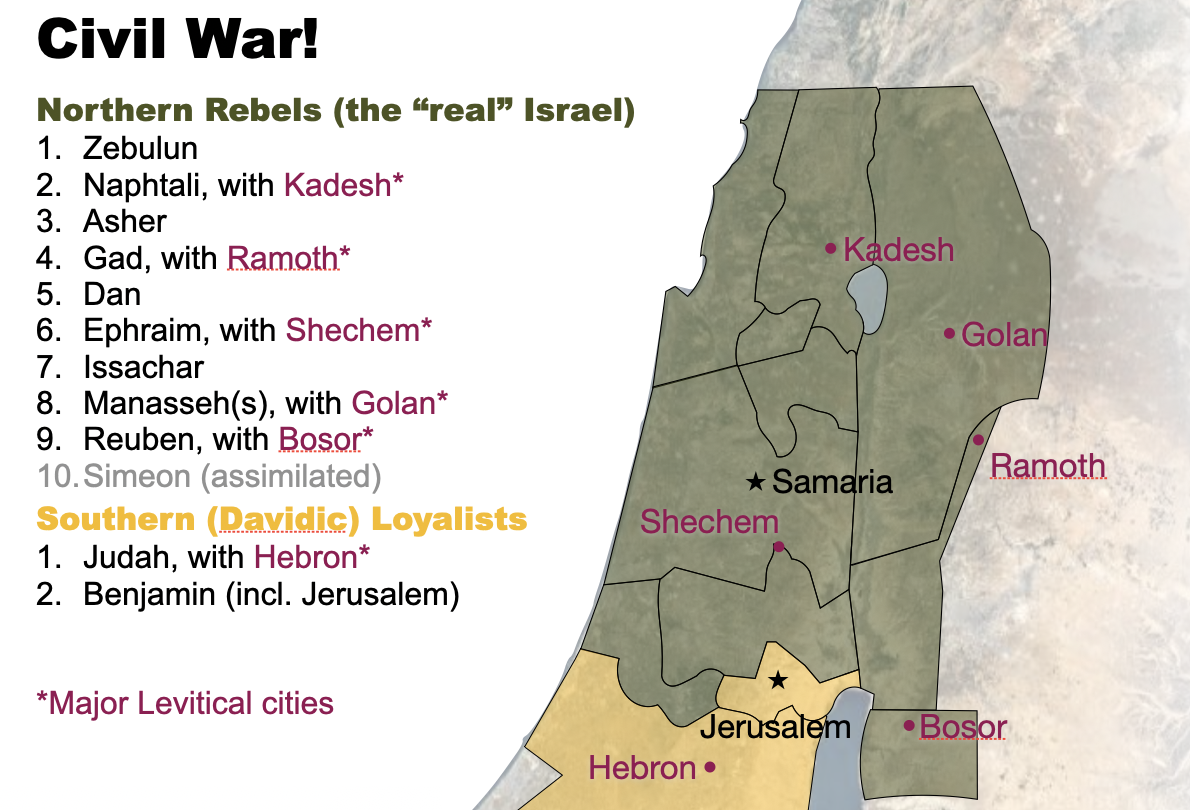
Galilee was not a prestigious address. The northern territories associated with the defeated tribal confederacies — Zebulun, Naphtali, the lands Isaiah names as the people who walked in darkness — were the peripheral remnant of a militarily crushed people. And it is from there, the tradition insists, that the light comes. Not from the strategic center. Not from the Temple establishment's calculation about which messiah would be most useful to Davidic supremacy. From the margins of the margins, the marginalized martial margins, the lands of the defeated troop tribes.
Polemics — the word, from polemos, war — operates in a binary. It pits extremes against each other and calls the middle the reasonable position. But the middle is not neutral. The middle is where strategy lives, and strategy, as I have said, protects itself. What gets lost in the binary is not the extreme positions but the people who cannot afford either one; the ones for whom a just war is still a war that will kill them, the ones whose bodies are the terrain on which strategic decisions are made and then forgotten.
The ending-war chapel is not a pacifist slogan. It is an interpretive commitment, read from a particular place. It says: before the vowels were fixed, there was a reading that imagined God not as a war-winner but as a war-crusher, still crushing, present tense. It says: that reading is older and has at least as strong a claim on our attention as the one that got standardized. It says: I am going to let that reading form me, from where I stand, and I am going to tell you why — and I am not going to pretend it is easy or cost-free.
It costs something to live by the older reading. But I have found that the things worth holding are often the most battle tested, the ones that don't help us forget our own history.